
The recent death of the nationalist commander Stanislav Orlov sheds light on a longstanding trend within the Russian military, writes journalist and researcher Anna Snegireva. Independent and vocal nationalist military leaders risk being killed by the very system they work for, as their deaths often remain shrouded in mystery.
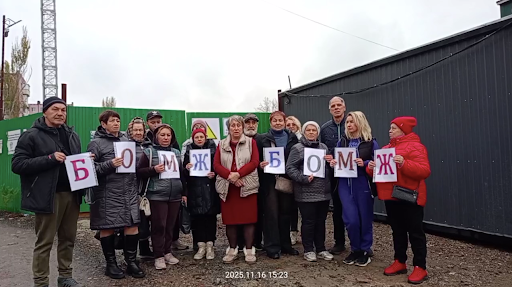
 Funeral of Stanislav Orlov in Moscow. Photo: Telegram / The Insider
On a cold morning on December 22, thousands of people gathered at the Cathedral of Christ the Saviour, the most symbolically charged church in Russia, located in the very center of Moscow. Long before the funeral service began, the square around the cathedral was already filled with men in military fatigues, some wearing medals, others dressed in black jackets marked with football ultras’ insignia. Their faces were grim, disciplined, and visibly out of place in a space more often associated with state ceremonies and officially sanctioned mourning.
Security around the cathedral was extraordinary. According to The Insider, a heavy presence of police, National Guard units, and other security and special services surrounded the church. Metal barricades blocked access from every direction; prison transport vans were parked nearby. Everyone entering the cathedral was thoroughly searched, with bags and backpacks sent through scanners. Inside, mobile communications were jammed entirely — phone service and mobile internet were disabled.
At the gates, hundreds more waited. Many carried flowers. Wreaths were stacked inside the church, as RTVI reported. But one detail stood out with unsettling clarity. As journalist Alexander Chernykh from Kommersant later noted, there were no wreaths from the Ministry of Defense, no condolences from the Kremlin, and no visible signs that the Russian state claimed the man being buried.
 Funeral of Stanislav Orlov in Moscow. Photo: Telegram / Aleksander Chernykh
The man in the coffin was Stanislav Orlov, known by his call sign ‘Spaniard.’ He was the founder and leader of the volunteer brigade ‘Española,’ a unit made up largely of football ultras and ultra-nationalist activists who had fought on Russia’s side since 2014 and later during the full-scale invasion of Ukraine. Around 3 thousand people came to say goodbye—fighters wearing the symbols of Española, veterans linked to Wagner, and football fans young and old. There were almost no speeches over the coffin.
That silence had already surrounded Orlov’s death for weeks.
Rumors of his disappearance had circulated throughout December in pro-war Telegram channels. At one point, a brief post appeared claiming that Orlov was dead—only to be deleted almost immediately. Even within the Española brigade itself, no one seemed to know what had happened. The brigade’s official channels acknowledged the speculation but insisted that ‘central investigative authorities’ were still determining the cause and location of his death.
A man who had spent more than a decade moving between war zones, building armed structures, and cultivating loyalty among fighters had simply vanished. For days, then weeks, there was no official acknowledgment that he was even dead. The funeral at the Cathedral—newsworthy in itself—became the first undeniable confirmation that Orlov was gone.
Only on the day of the burial did a version of events finally emerge, and it did not come from the state. Investigative outlet ASTRA published a detailed report reconstructing Orlov’s last hours. According to ASTRA, he was killed on December 4, 2025, at his country house in annexed Crimea, when armed men in camouflage stormed the house and shot him. Witnesses told the outlet that Orlov did not return fire. Video footage from nearby cameras reportedly shows multiple vehicles arriving and leaving the scene, followed hours later by an ambulance without sirens.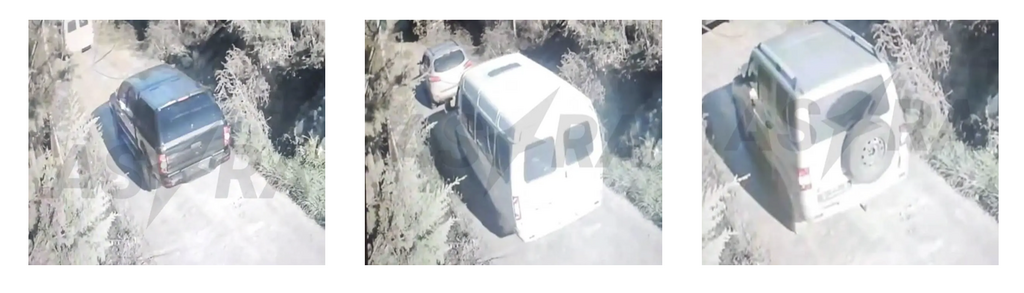
Screenshots from the CCTV on 4th December at Orlov’s dacha. Photo: ASTRA
ASTRA’s reporting also noted something even more disturbing: Orlov’s family had not been officially informed of his death. His son reportedly filed a missing-person report days after the killing, unaware that his father was already dead.
Inside the cathedral in Moscow, none of this was mentioned aloud. The funeral of Stanislav Orlov looked, at first glance, like a tribute to a fallen commander. In reality, it was a display of something else entirely: a man mourned by thousands, buried at the symbolic heart of the capital, and yet conspicuously abandoned by the system he once served.
‘Silent Russia’
For many in the so-called Z-community, Orlov’s death no longer looked like an isolated tragedy or a murky criminal episode. Instead, it was framed as yet another case in a growing pattern — the elimination of commanders who had become too independent, too visible, or too inconvenient for the state.
This reaction was especially striking given Orlov’s previous status. Until recently, he had been a familiar and often celebrated figure in pro-Kremlin media. State-aligned outlets had published flattering profiles of the Española brigade, broadcast footage of its operations, and presented Orlov himself as an effective commander. His image circulated freely, with photographs, interviews, and battlefield reports portraying him as a model volunteer fighter.
 Funeral of Stanislav Orlov. Photo: Telegram / The Insider
That visibility, commentators now suggested, may have been precisely the problem.
One influential pro-war Telegram channel summed up the mood in a post titled Silent Russia. The author recalled how even early reports of his death, including a brief post by well-known Edgar Zapashny that was quickly deleted and vanished without explanation. What followed, the post argued, was a wall of silence: no official statements, no clear charges, no public version of events.
According to the post, this silence was no longer an exception but a defining feature of contemporary Russia. The author traced a line back to 2014, when the deaths of prominent commanders in Donbas were often explained away by chaos, lawlessness, and the myth of a ‘frontier war’ beyond formal state control.
What made Orlov’s case especially uncomfortable for the Z-community was the contrast between public silence and the level of detail published by independent and ‘foreign agent’ media ASTRA. The conclusion was bleak. ‘Silent Russia’, the post suggested, does not deny or refute. It simply absorbs — deaths, questions, and inconvenient people alike — and moves on.
The death of Evgeny Prigozhin
By late 2025, after the effective dismantling of Wagner, Española remained the last openly politicized armed structure in Russia. While Wagner incorporated fighters with diverse backgrounds and functioned primarily as a military contractor, Española distinguished itself through its explicitly ideological and nationalist character. The group did not hide its political ambitions and actively promoted nationalist narratives through its media channels, while emphasizing loyalty to the state. In October 2025, Española itself announced its dissolution and the transfer of its units under the control of the Russian Ministry of Defense — a move presented as voluntary and orderly.
Stanislav Orlov’s death raised uncomfortable questions within the Z-community, and is undeniably tied to the death of Yevgeny Prigozhin in 2023. For many pro-war commentators, Prigozhin’s fate had already stripped away any remaining illusions about how the system treats commanders who grow too powerful, too autonomous, or too politically visible.
Unlike Orlov, Prigozhin was not a marginal figure. He commanded a private army numbering in the tens of thousands, controlled vast financial resources, and enjoyed direct access to the highest levels of power. For years, Wagner functioned as a semi-official instrument of Russian foreign policy, operating where the state wanted plausible deniability and decisive violence at the same time.
Orlov’s death is undeniably tied to the death of Yevgeny Prigozhin
The breaking point came in June 2023, when Prigozhin launched what he called a ‘march for justice’ toward Moscow. Wagner forces seized military facilities in Rostov-on-Don – a city of more than 1 million people and the headquarters of Russia’s Southern Military District — and advanced hundreds of kilometers north with almost no resistance. For several hours, an armed structure outside the formal chain of command openly challenged the state.
The march ended without a direct clash. Prigozhin accepted a deal, called back his troops, and publicly declared the conflict over. Official rhetoric quickly softened. He was no longer labeled a traitor. Wagner fighters were praised for their combat record. The message seemed clear: the crisis had passed. However, this rebellion had crossed a line that could not be uncrossed. For the first time, a commander had demonstrated not just autonomy, but leverage — the ability to act independently and force the state into negotiations. 2 months later, Prigozhin was dead.
In August 2023, his private jet crashed under unexplained circumstances, killing everyone on board. The investigation was not convincing enough to quiet speculation that Prigozhin had been killed by the Kremlin. For pro-war audiences, however, the details mattered less than the timing. Prigozhin died after he had been forgiven, after he had appeared to reconcile with Vladimir Putin, and after Wagner’s future had been formally resolved.
The Dead Commanders
Long before Stanislav Orlov — and even before Yevgeny Prigozhin — Russia’s war in Ukraine had already produced a grim list of commanders who died under strange, unresolved, or deliberately obscured circumstances.
The first wave of non-combat deaths among influential field commanders swept through Donbas in 2015, primarily on the territory of the self-proclaimed ‘Luhansk People’s Republic’. What initially appeared as internal disorder soon revealed a clearer logic: the systematic removal of autonomous figures who challenged emerging power centers.
Long before Orlov, a grim list of commanders had already died under strange circumstances
The killing of Alexey Mozgovoy, leader of the Prizrak (‘Ghost’) Brigade, in May 2015 marked a turning point. His vehicle was blown up near Alchevsk — deep inside territory firmly controlled by ‘LNR’ forces. Officially, Ukrainian troops were blamed. Yet Mozgovoy had recently criticized both the Minsk agreements and the war itself, calling ‘anti-fascism’ a business model rather than an ideology. Although he was not the first commander to die under mysterious circumstances that year, he was one of the most articulate internal critics at the time.
The year ended with another elimination. In December 2015, Cossack ataman Pavel Dremov was killed when his car exploded en route from Stakhanov to Pervomaisk — again on a road controlled by his own fighters. Dremov had accused the ‘LPR’ authorities of corruption, smuggling coal into Ukrainian-controlled territory, and selling humanitarian aid. The investigation produced nothing.
Second wave of killings
The second wave followed in 2016, after a brief lull that suggested internal power struggles had been settled. In reality, they had merely entered a quieter phase.
During that wave, one killing stood apart as being particularly public. Arsen Pavlov, known as Motorola, was assassinated in Donetsk in October 2016. Pavlov was a media icon of the so-called ‘Russian Spring’. He gave interviews, posed for cameras, and openly boasted about executions of Ukrainian prisoners. In October 2016, he was killed when an explosive device detonated in the elevator of his apartment building. The killing was officially blamed on Ukrainian sabotage, but there have always been voices suggesting he was killed by his own comrades.
Another unresolved death that continues to circulate in nationalist and pro-war discussions is that of Valery Bolotov, the first leader of the self-proclaimed Luhansk People’s Republic. Official explanations — alcohol poisoning or heart failure — were publicly challenged by his widow. According to her testimony, on the eve of his death Bolotov met with two unidentified men at a café in Moscow. After returning home, he repeatedly complained, ‘Why did I drink that coffee?’ Bolotova left to find a doctor, and when she returned, her husband was already unconscious. These details, she argued, made the official version implausible and reinforced suspicions that Bolotov’s death, like many others before and after him, was never intended to be transparently investigated.
After this second wave, the original generation of 'Russian Spring' commanders had largely disappeared. Some were killed, others arrested, and a few quietly removed. What remained was a new order — more centralized, less charismatic, and far more obedient. The transformation was anything but bloodless.
The original generation of 'Russian Spring' commanders had largely disappeared
With the start of the full-scale invasion in 2022, the explanations for suspicious deaths grew thinner. The death of Igor Mangushev, known by the call sign Bereg, became one of the most disturbing episodes in this series. He died in February 2023 from a gunshot wound to the back of the head, sustained far from the front line. His wife publicly stated that the nature of the injury pointed to an execution and demanded an explanation from the Russian Ministry of Defense as to why no investigative actions were taken even a day after the shooting.
Official accounts conflicted over his official status in the military — state media described him as a commander within the Luhansk ‘People’s Militia’, while his family insisted he was an active-duty Russian serviceman. Pro-war Telegram channels offered incompatible stories, reporting that the shooting occurred at a checkpoint or after a forced stop on the road, but several sources agreed on one point: Mangushev was not killed in combat, and those responsible were never identified.
One left
By early 2025, even this ecosystem of militant nationalism had all but disappeared inside Russia. In January, Denis Nikitin, the head of the Russian Volunteer Corps - which fights on Ukraine’s side - wrote that his unit had effectively become the only remaining Russian nationalist battalion anywhere. His claim underscored a stark reality: no ideologically driven nationalist armed groups were operating on Putin’s side.
In the same Telegram post, Nikitin pointed to a contrasting strategy of survival. He noted that Alexey Milchakov, the neo-Nazi commander of the sabotage group ‘Rusich’, is a smart man — smart enough, he argued, to avoid joining the long list of ‘people’s atamans’ and field commanders allegedly killed by ‘Ukrainian sabotage groups’. Shortly after that, Milchakov publicly reconciled with Apti Alaudinov, the commander of the Chechen Akhmat unit — despite a long-standing and very public conflict between Rusich and other Russian nationalist and pro-war groups on the one hand, and Chechen formations on the other.
The conclusion implied by Nikitin’s observation is stark. Armed nationalism in Russia is tolerated only when it is silent, obedient, and politically inert. Those who attempt to remain independent actors — with their own agendas, audiences, and authority — are eventually neutralized.
Help ons om RAAM voort te zetten
Met uw giften kunnen wij auteurs betalen, onderzoek doen en Kennisplatform RAAM overeind houden en verder uitbouwen tot hét centrum van expertise in Nederland over Oost-Europa. Wij zijn een ANBI: uw gift is aftrekbaar van de belasting.