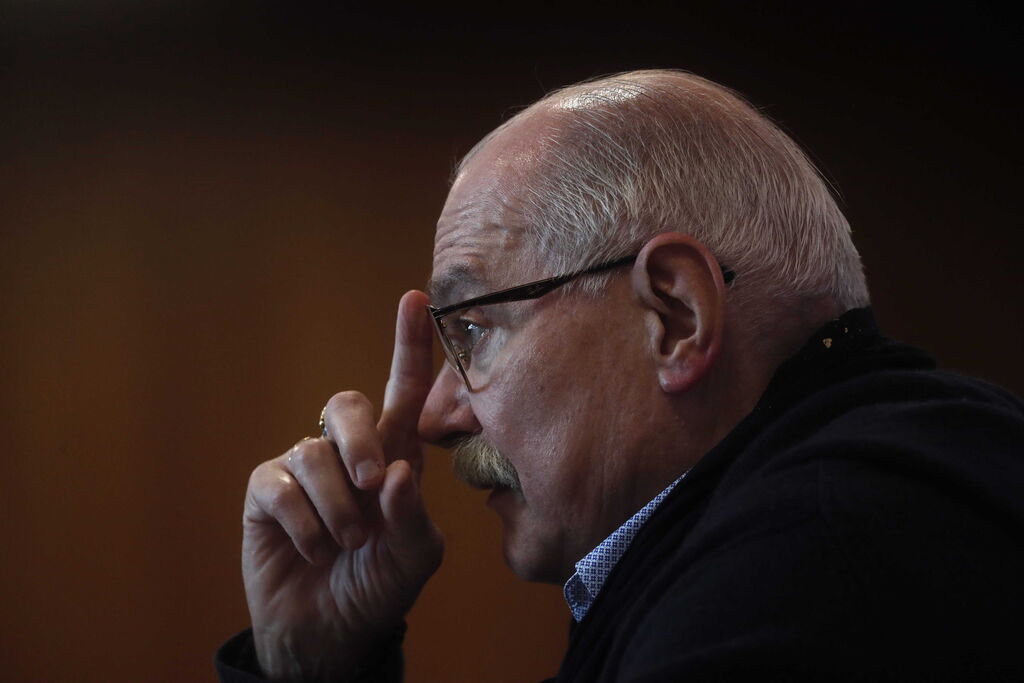

This weekend, the Dutch premiere of Julia Loktev's film My Undesirable Friends: Part II—Exile is screening at IDFA in Amsterdam. It follows exiled Russian journalists in their struggle to continue their work from abroad. Svetlana Satchkova spoke with Loktev about her new documentary, as well as with the film's protagonists.
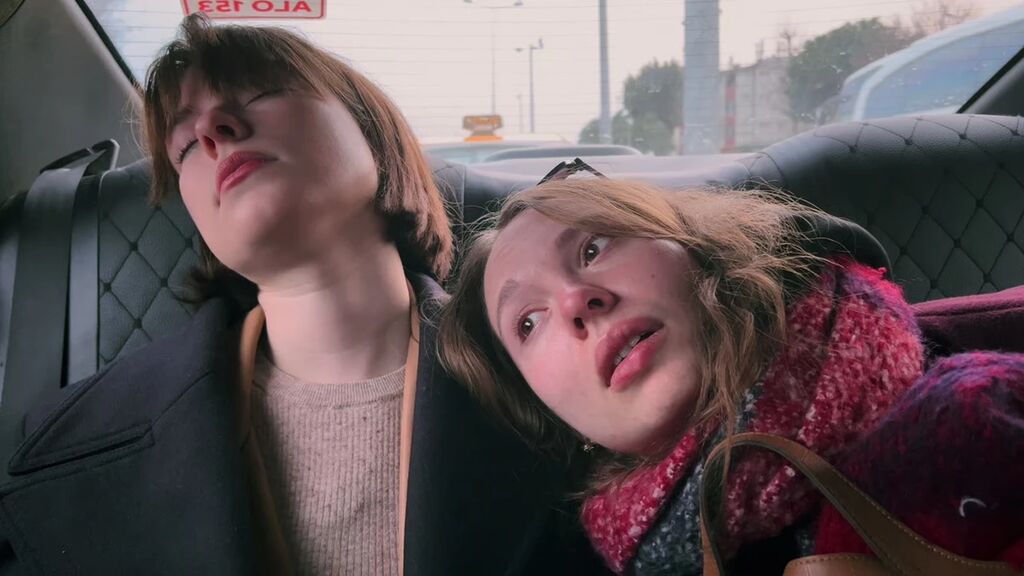 Ksenia Mironova and Valeria Ratnikova, two of the protagonists in My Undesirable Friends: Part II—Exile
Julia Loktev’s documentary My Undesirable Friends: Part I—Last Air in Moscow, released last year, followed a group of young, mostly female journalists in Moscow as Russia invaded Ukraine and cracked down on independent reporting. The film was a huge critical success and was shortlisted for an Oscar. This year, Loktev released the second part, My Undesirable Friends: Part II—Exile. Nearly six hours long, it follows the same journalists as they settle in different countries and try to find a way to continue their work in exile.
Loktev says over a video call from Los Angeles that when she started filming in late 2021, she thought she was making a documentary called The Lives of Foreign Agents, about journalists in Russia who were being designated as foreign agents and trying to figure out how to keep working. 'And then, when Russia started the full-scale war, it became clear that this was a much bigger film, that I was there capturing this historic moment live. Within a week, all the independent media were shut down, and everyone had to decide whether to go to prison, stop reporting on the war, or go into exile. So I followed them as they left Russia and went from country to country. At that point, I wasn't thinking one movie, two movies, any movie. I was just thinking, Oh my God, you're in this historic moment with a camera, with these incredible people, and you have to keep filming. I'll figure out what to do with it later.'
She ended up with hundreds of hours of footage. Early in the editing process, she decided to "respect and honor" the material and let it dictate the film’s form rather than impose one on it. 'I had some investors who offered me a million dollars, which I really needed at the time. But the contract required it to be a regular feature-length film, and I couldn't commit to that. I believed the film had to emerge from the material, rather than imposing some outside idea on it. I wanted to give people a chance to live through this experience with the characters, to hear their jokes, see them cry, laugh with them. And you need time for that. You need time for life. So I lost that million. I said, no, thank you.'

Grief, PTSD, and other challenges
One of the people Loktev wanted audiences to spend time with was Elena Kostyuchenko, a journalist who had worked for Novaya Gazeta for 17 years. When Russia launched its full-scale invasion of Ukraine, Kostyuchenko was there reporting on the war. But she had to flee after several sources warned her that Russian troops had been ordered not just to detain her, but to kill her. She went first to Poland, then Germany, and eventually the United States. In the fall of 2022, several independent Russian journalists, including Kostyuchenko, were poisoned, allegedly by Russian intelligence services. All survived, but suffered lasting health problems.
'I’ve been very lucky because I no longer have any serious problems, although it took about three years to recover,' Kostyuchenko tells me over Google Meet. 'Only recently have I returned to the same level of energy I had before the war. The symptom that lasted the longest was what Americans call fatigue. You haven’t done anything, but you’re already completely exhausted.' At first, she says, just standing in the shower and brushing her teeth for five minutes would use up all her energy, leaving her lying down for the rest of the day. Sometimes she was so exhausted that she cried. Gradually, she recovered, going from being able to work half an hour a day to an hour, then an hour and a half. 'Now I’m back to my normal working hours, and I’m very happy that so far I haven’t had any lasting effects that affect my quality of life.'
'I started working on educational projects for journalists still in Russia'
Kostyuchenko speaks about how difficult exile has been for her. 'It affected me very badly because I’m a field reporter. My main way of working is to be there, to observe what’s happening and write about it. All my life, I wrote about Russia, in Russian, for Russians, and suddenly that became impossible.' Some of her colleagues, she says, switched to reporting by phone, interviewing people and sources remotely, which is a perfectly legitimate way of doing journalism in exile. But it didn’t work for her. At first, she grieved the loss of the work she’d always done. 'Then I realized that just because I couldn’t do it didn’t mean other people couldn’t. So I started working on educational projects for journalists still in Russia, many of whom had never worked as journalists before the full-scale war. They often have no formal training, but they’re very smart people.'
It turned out that Russian journalists weren’t the only ones who could benefit from her experience. Kostyuchenko now teaches American students. During the 2025–2026 academic year, she taught at Duke University, where her courses included Contemporary Reportage and Literature of Ongoing Catastrophe. Next semester she plans to offer a course on reporting from crisis zones, covering not just wars, but also revolutions, pandemics, and natural disasters. 'I’m also involved in some investigative projects that I can work on remotely, but I’d rather not go into detail about those. And I’m also working on my second book.'
In 2023, Elena Kostyuchenko’s first book was released in English, with the provocative title I Love Russia. Svetlana Satchkova discussed the book for RAAM.
Kostyuchenko says that, like her colleagues in exile, she’s dealing with grief, PTSD, and the challenges of navigating completely unfamiliar systems, including healthcare. 'People who haven’t experienced involuntary emigration don’t really understand how much energy goes into simple everyday things that you wouldn’t even notice in your own country. Making a dentist appointment, getting a driver’s license, taking your cat to the vet.' She has also married her longtime partner, Yana, and the two now have a family. 'I’m very grateful to America for registering our marriage,' Kostyuchenko says. 'But I want my marriage to my wife to be registered in my own country, and I want my rights to be recognized there. That’s why I spent so many years involved in LGBT activism, and why I continue to do it. I still plan to achieve marriage equality in Russia and one day have my wedding in Red Square.'
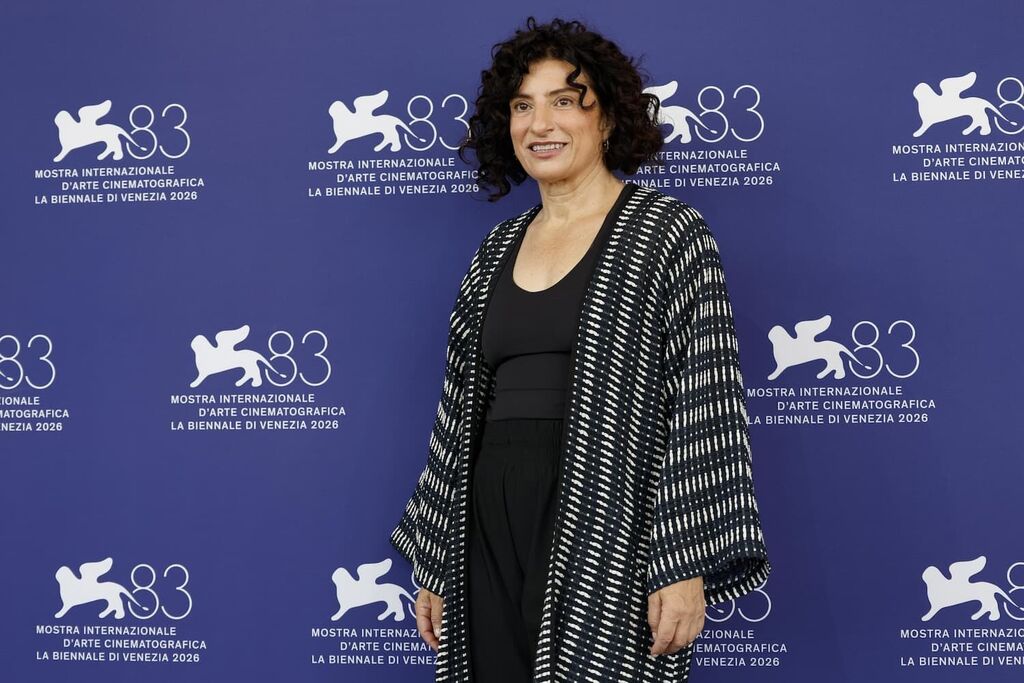 Julia Loktev, director of My Undesirable Friends. Photo: Fabio Frustaci / ANP / EPA
Legal and bureaucratic harassment
Another protagonist of My Undesirable Friends, Sonya Groysman, tells me that she has simply forbidden herself from feeling sorry for herself or dwelling on the opportunities she’s lost. She started out as a video journalist and spent many years at TV Rain and Proekt, working primarily on stories that required traveling, reporting on the ground, and talking to people in person. 'The last time I was able to do that was in February 2022,' she says, 'when I went to film in the border region. That story only came together because I could go there, meet people, and talk to them in person. I no longer have that opportunity.'
That’s one of the reasons she turned to podcasts. After leaving Russia, Groysman lived in several countries, including Turkey, Georgia, Latvia, and the United States. After completing a fellowship at Harvard University, she finally settled in Barcelona, which, she says, 'given everything that’s happened, is certainly not the worst place to end up.' She left TV Rain before moving to the United States to study. 'For years, alongside my work there, I’d been running my own project, a podcast called Hello, You’re A Foreign Agent. Since the war began, we’ve managed to release many seasons.'
That podcast is now on pause, and she’s working on a new one. Groysman also freelances for Russian and international media outlets. She has several projects in development but prefers not to discuss them until there’s something concrete to share. Working for Western audiences is something she probably wouldn’t have pursued, she says, if she hadn’t been forced into exile, since it had never particularly interested her before.
All her loved ones are still in Russia, which is one reason she continues to comply with the foreign agent requirements as much as possible
So far, her encounters with the Russian state have been limited to legal and bureaucratic harassment. 'I regularly receive administrative fines under the foreign agent laws, and enforcement proceedings have now been initiated against me. It’s always on the verge of becoming a criminal case, although there isn’t one yet.' All her loved ones are still in Russia, which is one reason she continues to comply with the foreign agent requirements as much as possible.
Sentenced in absentia
Valeria Ratnikova, one of the youngest protagonists of My Undesirable Friends, was not quite 23 when she had to leave Russia. She works for TV Rain, now based in Amsterdam. In March, she was sentenced in absentia to seven and a half years in prison in Russia for allegedly spreading false information about the Russian military. 'It’s one of the ways the Russian authorities can still reach you even after you’ve left the country and think you’re free to say whatever you want,' she tells me over a video call. 'They remind you that you’re not safe everywhere, that there are countries from which you could be extradited to Russia, and there are many of them. It’s a constant, unsettling feeling. The sentence also reminds you that they’re watching you. They understand that we still have an audience inside Russia, and they find it unacceptable that we continue our work and have an influence on people there.'
Ratnikova doesn’t want to live in constant fear, so she tries to lead a normal life while taking basic precautions, such as keeping her address private and avoiding exposing relatives who are still in Russia. She recently got married but prefers not to identify her husband publicly. 'I archived my wedding photos on Instagram. We had two beautiful weddings, one for our relatives from Russia and another for our local friends. It felt so unfair that I couldn't share such a happy moment in my life.'
Ratnikova believes that journalists have an easier time adapting to exile than politicians or activists, whose work depends much more on being physically present in the country. Although living abroad makes it harder to stay connected to everyday life in Russia, the country is so vast that even when journalists were based in Moscow, they relied on online sources to learn what was happening in distant regions. They can still follow events closely, even if they no longer experience them firsthand.
'I never imagined myself living outside Russia'
In terms of work and community, Ratnikova says, things are going well. 'A large group of us moved abroad together, so we were able to keep some of our familiar social circle. That also helps us cope.' Still, exile has been painful. 'It was deeply traumatic for me, even on a personal level, because I can no longer spend time with my family the way I used to. I often think about how I’ve been deprived of some of the most basic things in life, simply because my country decided to throw me out for my political views, even though I only wanted what was best for it.'
'There’s a terrible sense of injustice in that. I never imagined myself living outside Russia. I was always interested in seeing and exploring the world, but I wanted to live and work in Russia, to do something for my country, because I’d always felt such a strong connection to it and loved it. And now those opportunities have been taken away from me.'
All three journalists I spoke with, Kostyuchenko, Groysman, and Ratnikova, have managed to rebuild their lives in exile and continue working in their chosen profession, but all would return to Russia immediately if Putin’s regime fell and the situation changed. Loktev hopes to make a third part of her documentary. She isn’t filming now, but wants to resume 'when something tremendous happens, maybe when Putin dies, and if any of these people can ever go back home.' She understands, though, that Putin’s death alone may not change anything, and that the journalists may not be able to return for decades. 'That’s literally what the film is about: people working for the benefit of a country they understand they may not return to for decades. So we understand we might be very old by then, especially me, because I'm much older than them.
The Dutch premiere of My Undesirable Friends: Part II—Exile is screening at the International Documentary Film Festival Amsterdam (IDFA) on Sunday, November 15, and Monday, November 16. Tickets can be purchased through the IDFA website.
10 jaar RAAM: wij hebben uw hulp nodig
In 2026 bestaat RAAM 10 jaar. Het is geen vanzelfsprekendheid dat we blijven voortbestaan. Daarvoor hebben we uw hulp nodig. Met uw giften kunnen wij auteurs een bescheiden honorarium betalen, onderzoek doen en Kennisplatform RAAM overeind houden. Wij zijn een ANBI: uw gift is aftrekbaar van de belasting.