Winter is just around the corner, and for Ukraine that means a new wave of Russian attacks on its energy system. Over the past month, Russia has already hit several power plants and gas production sites, leading to power and water outages and fears for a difficult winter. In an article for the Ukrainian website Ukrainska Pravda, Roman Romaniuk and Mykola Topalov explain the vulnerabilities in Ukraine's energy system, as well as internal conflicts which led to a lack of preparation for winter.
Residential buildings on the left bank of the Dnipro river during a power outage in Kyiv on October 10, 2025, following a Russian attack with missiles and drones. Photo: Genya Savilov / ANP / AFP
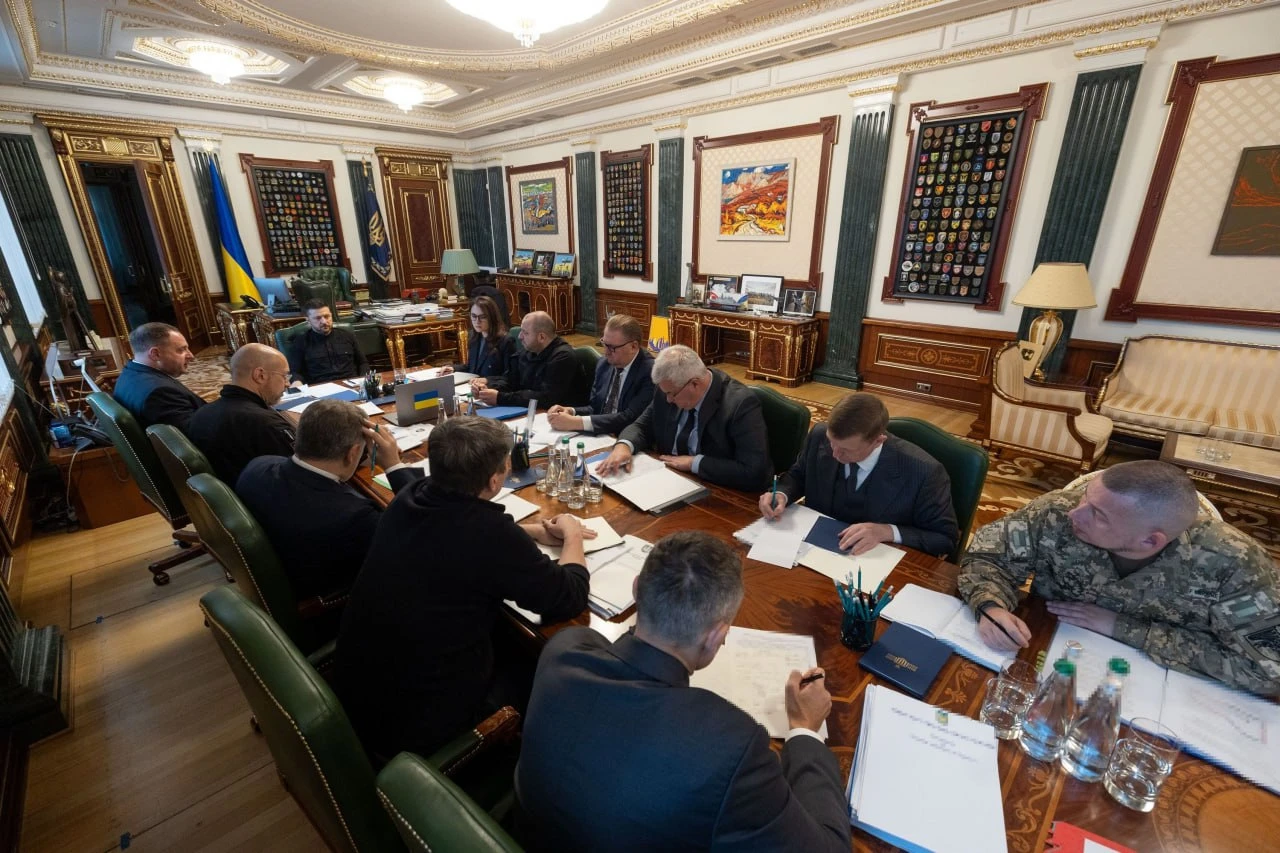
Ukrainian President Volodymyr Zelensky convened a meeting with the leadership of his Office, the Foreign Ministry, the Defence Ministry and other key departments on October 10th. The first item on the agenda was a review of agreements with international partners on military assistance, particularly measures to protect the energy sector.
Among other things, Zelensky asked for clarification – something he has done in previous meetings – about who is responsible for what in the energy sector, which bodies oversee which facilities and what he, as president, could do to help at his level. The previous such meeting, on October 6th, had ended in a tense discussion, with raised voices.
The October 10th meeting took place against the backdrop of renewed heavy Russian attacks on Ukraine's energy infrastructure. That same day, the Russians struck two thermal power plants (TPPs) in Kyiv with considerable success: half the city was left without electricity and water.
Even the government quarter was affected, with its water supply cut off. From the windows of the president's office, attendees could see tanker lorries delivering servicewater to government buildings.
In such discussions, with varying participants, a pattern emerges. The longer the meeting goes on, the less clarity there is about who is responsible for what, and who will carry out the tasks set during the previous session.
At some point, Zelensky, in a righteous fury, resorts to shouting to compel officials to speak plainly, stop repeating empty phrases and stop passing the buck.
Typically, his demands are fairly straightforward: to explain, for instance, how many energy facilities are properly protected, which ones need to be shut down to prevent the country from plunging into darkness, and which are at risk of failing entirely.
When it comes to the question of 'who is to blame for such a large part of the network being so poorly secured?', ministers and heads of relevant state agencies usually have no answer other than: 'our predecessors'.
At some point, Zelensky, in a righteous fury, resorts to shouting
Yet, former Deputy Prime Minister Oleksandr Kubrakov, whose team began building protective measures for energy facilities, was dismissed more than a year and a half ago. In other words, the 'new' officials are taking longer to complete these protective measures than their 'predecessors' did to build them.
Attempts could be made, as some suggest during the meetings of the Staff of the Supreme Commander-in-Chief, to make a show of chasing former officials, but that does nothing to address the incompetence of the current team.
Nor does it solve the problem of protecting gas production, massive heat and power generation facilities or gas storage sites.
Meanwhile, Russia is intensifying its attacks. According to Naftogaz Group, Ukraine's largest national oil and gas company, Russia has launched three major strikes on Ukraine's gas facilities over the past week [9-16 October]. The city of Kyiv and many Ukrainian regions are already experiencing rolling power outages.
Ukrainska Pravda examines whether Ukraine's energy system can withstand Russian attacks, what scenarios need to be prepared for, where power cuts are inevitable and how Russia has changed its tactics in terrorising major cities.
A new phase in the energy war: how the Russians have changed their tactics
The next heating season could, under certain scenarios, prove more difficult and problematic than the winter of 2022-2023, when Ukraine endured dozens of heavy strikes, nationwide power outages and simultaneous power cuts that left over 10 million people without electricity.
Sources in the energy sector told Ukrainska Pravda that the nature of recent strikes and the scale of the damage show the Russians are prepared to act even more cynically this time.
Whereas Russia relied on 'carpet bombing' in 2022-2023 – striking many targets across the country with many missiles and drones – it is now using a tactic of staged attrition. The Russians are knocking out Ukraine's energy system region by region.
What does that look like in practice? First, there are local attacks on frontline and border regions – most notably Sumy and Chernihiv oblasts, which are suffering the most at present. Kharkiv, Odesa, Mykolaiv and Dnipropetrovsk oblasts are also being struck – less intensively, but still regularly.
The Russians no longer launch one large wave at once, as they did before
Across all these areas, the Russians are methodically trying to destroy the energy system in its entirety: local generation, the transmission through Ukraine's state-owned electricity transmission system operator Ukrenergo, electricity substations, and even distribution within large cities via regional operator substations.
In August and September, these strikes were conducted mainly by drones, with typically around 10 UAVs [Unmanned Aerial Vehicles] per target, although in some cases the number rose to as many as 40.
Another change is that the Russians no longer launch one large wave at once, as before. Instead they strike in series, sending a few drones every hour. Ukrainian power engineers say they have not seen this tactic until now.
Drone strikes are then followed by heavy attacks on generation facilities, including the use of ballistic missiles. The latest of these occurred on 10 October, when several hydroelectric stations were hit, along with the Prydniprovska and Kryvorizka thermal power stations and Kyiv's thermal power plants. Most of the facilities suffered serious damage.
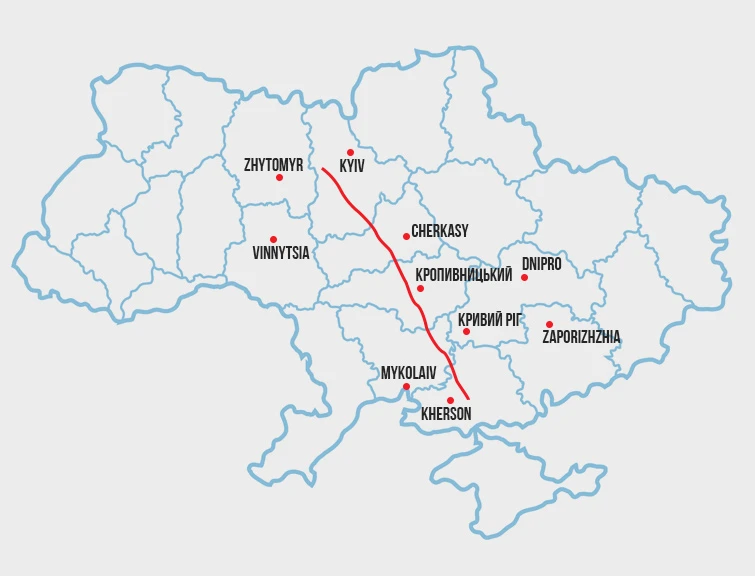
The Russians' overarching aim remains unchanged: to destabilise the system and trigger a cascading failure – a blackout. To achieve this, they first try to split the country's grid into two large, unmanageable parts. On a map, their goal looks roughly like this:
The Russians are trying to split Ukraine's power system in two, to trigger a large-scale power outage. The red line on the map denotes a notional 'energy watershed' – the divide between the country's left-bank and right-bank regions.
The intention is to create a deficit in Ukraine's east – historically the region with higher energy consumption, and where almost all local generation has already been damaged – and to gradually paralyse the west‑to‑east flow of electricity.
As a result, the country could end up in two realities: a deficit-hit east and a surplus west, connected only by severely weakened transmission links. That would be an ideal situation for the Russians to provoke a blackout.
The country could end up in two realities: a deficit-hit east and a surplus west
The next step could be strikes on dispatchable generation (thermal power plants) in Ukraine's west, followed by attacks on the distribution equipment of nuclear power plants.
If those facilities are damaged simultaneously, nuclear stations may be unable to supply electricity to consumers. There could be frequency spikes and a systemic collapse.
Ukrainian power engineers remember this scenario well from November 23rd, 2022, when the country experienced the largest power outage in its history. Over 10 million people were left without power, water and heating simultaneously. The system was stabilised in roughly a day, but restoring electricity across regions took two to three days and in some places up to a week.
Shortages
Ukrainians should prepare for both emergency outages and scheduled ones, over a prolonged period. Experience from recent years shows that in one or two attacks, the Russians can knock out more generation than Ukraine can restore over an entire summer.
'This winter will certainly be one of shortages. Emergency outages are already in effect across almost the whole country. Most likely, in winter we will face a "4×2" scenario: four hours without power, two hours with it', a representative of one state energy company predicts.
It is already clear that the hardest hit areas will be frontline and border regions – above all Sumy and Chernihiv, with Kharkiv, Zaporizhzhia, Dnipropetrovsk, Mykolaiv, Odesa and Kherson oblasts also under threat.
In one or two attacks, the Russians can knock out more generation than Ukraine can restore over an entire summer
One of the key problems, the official says, is that Ukraine's air defence cannot provide full protection.
'When 30 to 50 drones and missiles target a single facility, even the most powerful systems cannot intercept them all. It only takes one precise strike to disable a power unit at a plant. In the case of substations, the damage can be repaired technically within two or three weeks, but that means little if there is no generation', he explained.
Meanwhile, Russian forces are also striking at Ukraine's gas infrastructure, namely extraction facilities, underground storage compressors and regional distribution networks.
'Their goal is not only to destroy the energy sector but also to disrupt the gas balance, so that Ukraine cannot maintain stable supplies of fuel for electricity and heat generation', a senior executive at another energy company said off the record.
Adding another layer of difficulty is the role of Russian energy specialists who are helping the military plan and prepare large-scale attacks, using their knowledge of Ukraine's systems to identify gaps and weak points.
'This is no longer a war of weapons – it is a war of engineers. On both sides, energy experts are monitoring strikes, calculating megawatts and reserves. Some are building, others destroying. The front line now cuts not only through trenches but also through control rooms', another company representative added.
Physical protection for Ukraine's energy
In addition to air defence systems, transformer substations and distribution points can and should be safeguarded by physical protection systems – in simpler terms, shelters.
The first of these structures began to appear in autumn 2022, when Russian forces started striking large substations after attacking Kharkiv's energy facilities.
At that time, the first line of defence consisted of large sandbags and gabions that energy workers used to shield transformers from shrapnel.
'Back then, Shaheds [Shahed-type drones – ed.] were less accurate, and missiles often landed in open fields. Those sandbags worked fine, protecting against debris when something exploded nearby', recalled one official who was involved in developing protective measures.
The first line of defence consisted of large sandbags and gabions
But it quickly became clear that sandbags alone could not protect the power grid. Zelensky's team decided that the issue required a systemic approach, and assigned the task to [former Deputy Prime Minister] Oleksandr Kubrakov's team and the State Agency for Restoration and Infrastructure Development within his ministry, which was then headed by Mustafa Nayyem.
'They went to the General Staff of the Armed Forces of Ukraine, gathered military engineers, and asked them to calculate what exactly needed to be built to endure drone strikes and what would be required to resist missiles. General Koval, who worked under [former Commander-in-Chief of the Armed Forces of Ukraine] Valeri Zaluzhnyi, assembled a team of highly skilled engineers. They did the calculations and came up with a three-tier protection system', said a former member of Kubrakov's team.
Three layers of protection
The system envisaged three layers of protection. The first one involved installing sand-filled gabions. The second required building concrete and metal structures to shield large transformers at key substations. Under the third and strongest layer, entire substations were to be sealed within reinforced concrete and steel, topped with a layer of earth.
In total, around 80 key transformer substations across the country needed protection to ensure the stability of the entire power system.
'Ukrenergo had about 80 critical substations – 750 and 330 megavolt – forming the backbone of the system. The president decided that the protection of the 20 most important ones should be assigned to the Agency for Restoration. Most of those sites were meant to have second-level protection, and some were planned for third-level fortifications. The remaining 60 or so substations were to be covered directly by Ukrenergo', explained a source involved in the construction.
Building works began, but almost immediately became entangled in political wrangling. Denys Shmyhal, who was prime minister at the time, struggled to understand why the second-level protective structures built by the Agency for Restoration cost two to three times more than similar facilities built by Ukrenergo. This dispute led to endless meetings, arguments, funding delays, missed deadlines, and other internal system failures.
'It's simple', said a former official involved with the Agency. 'People forget that all the Agency's facilities had been formally approved by the General Staff, complete with signatures and seals detailing precisely what was to be built and how. If it said there should be a certain thickness of concrete or metal, that's exactly what was built. As a result, when eight drones hit the substation in Nizhyn [a city in Chernihiv Oblast – ed.], followed by another twelve, the transformer didn't even stop working.'
'But in Kirovohrad region, Ukrenergo recently built two 'cheaper and prettier' substations based on its own design. Two drones struck – and the entire substation burned down. Should the cost of replacements and losses from power cuts now be factored into the project's cost?' the former official added, clearly incensed.
In the end, disputes over pricing, unfinished third-level fortifications and political infighting eventually drove minister Kubrakov's team out of office. By spring 2024, when this happened, the Agency's second-level shelters were roughly 85% complete, while Ukrenergo's readiness stood at around 40%.
Matters took a serious turn when Kubrakov and Ukrenergo head Volodymyr Kudrytskyi were both relieved of their duties.
'Kudrytskyi had an excellent reputation with international partners, which gave him access to a large portfolio of low-interest loans for the company. That allowed financial flexibility. When [the then energy minister] Herman Halushchenko and his circle forced him out, most of Ukrenergo's creditors gradually stopped working with the company. Its resources soon ran dry', explained an MP from the ruling party, who is familiar with the energy sector.
Disputes over pricing, unfinished third-level fortifications and political infighting eventually drove Kubrakov's team out of office
A lingering sense of complacency has done the country no favours. After the relatively calm winter of 2024-2025, both the government and, in particular, the team of controversial former energy minister Herman Halushchenko lost their focus on funding the protection of energy facilities. They became absorbed in other priorities – such as trying to persuade the Verkhovna Rada (Ukrainian parliament) to approve the purchase of 'Bulgarian' reactors for the Khmelnytskyi Nuclear Power Plant.
Personnel reshuffles in regulatory bodies and state energy companies consumed far more time and energy than preparations for the entirely predictable new wave of attacks. This was especially true during the government transition, when Halushchenko's political strategists realised that there was no viable way to keep him in his post at the Energy Ministry – his name had become too toxic.
It was at that point that the idea surfaced to appoint Svitlana Hrynchuk to head the energy ministry – a person with no prior experience in it, but who was considered to be completely 'manageable' by Halushchenko [who currently serves as minister of Justice] and his superiors in government.
'You almost feel sorry for Hrynchuk. Herman still makes all the important decisions, just as before. But if anything happens, he will simply move to another ministry. Svitlana, meanwhile, has found herself in the middle of a storm. It's only October, and the system is already shaking, with almost no chance of stabilising it', said one informed MP from the ruling party.
For much of the first half of the year, the government's energy team focused on everything except strengthening the power grid. Back in February 2025, the head of the Agency for Restoration reported that 90% of all second-level protection sites were complete. As of October, they are still not finished, and in many regions, work resumed only a few weeks ago.
'Since summer, Zelensky has been trying to get his energy officials to act. A few months ago, regional military administrations were instructed to protect smaller substations at the oblast energy level and below. None of them did anything – except for Zaporizhzhia Oblast', said a source from the energy sector familiar with the situation.
'Since summer, Zelensky has been trying to get his energy officials to act'
'Recently, it was decided that Deputy Prime Minister Oleksiy Kuleba would take charge of the issue. Regional authorities, for their part, have readily handed the burden back to the Agency for Restoration. The new head of the Agency for Restoration, Serhii Sukhomlyn, is trying to get things back on track, but it's impossible to finish within the deadline of two or three months set by the order. He's already warning contractors they could be shot for missing deadlines – but that won't change reality', the source added.
'The worst part is that during the president's staff meetings, Zelensky keeps asking for a clear answer – who is covering which facilities, and which ones still need protection. Everyone just looks down and passes the responsibility to someone else', said one of those present at the meetings, describing the atmosphere with evident dejection.
Authors: Mykola Topalov, Roman Romaniuk, Ukrainska Pravda
In 2026 bestaat RAAM 10 jaar. Het is geen vanzelfsprekendheid dat we blijven voortbestaan. Daarvoor hebben we uw hulp nodig. Met uw giften kunnen wij auteurs een bescheiden honorarium betalen, onderzoek doen en Kennisplatform RAAM overeind houden. Wij zijn een ANBI: uw gift is aftrekbaar van de belasting.
In an attempt to mobilise new recruits for its war against Ukraine, Russia mobilizes soldiers all around the world - including in Cuba. There may be around 5,000 of them fighting, and many appear to b...
Thousands of Ukrainians are trapped in Russian 'temporary detention centers' awaiting deportation to Ukraine. Among them are long-term Russian residents and civilians from occupied territories, many h...
Ukraine is intensifying its attacks on Russian oil refineries, crippling nearly one-fifth of Russia’s production capacity. This raises a pressing question: will Russia face a genuine fuel crisis wit...


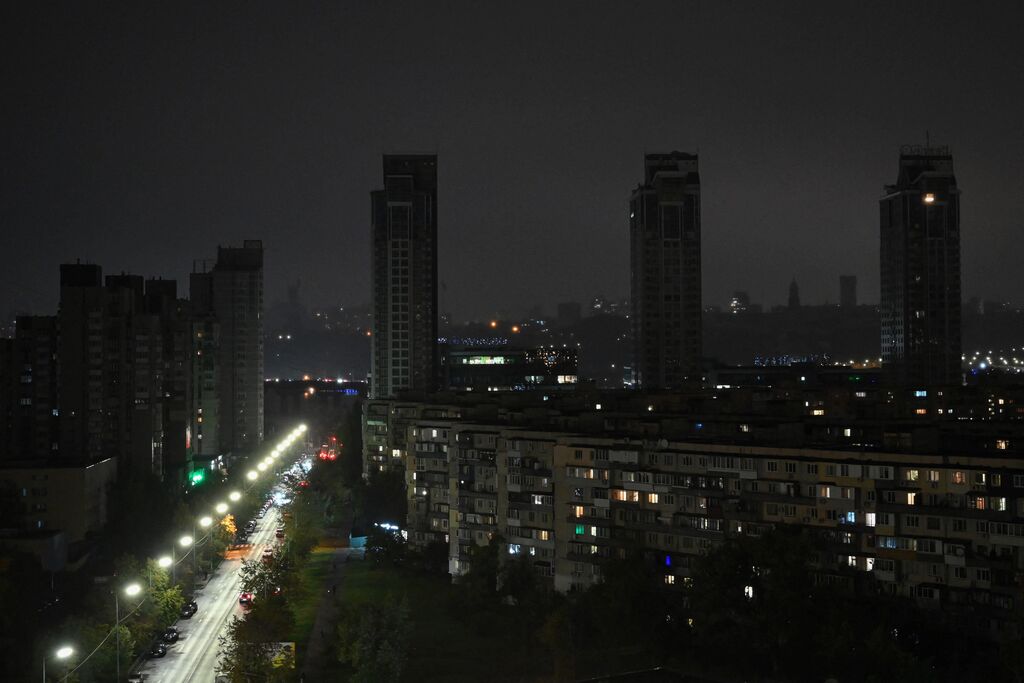 Residential buildings on the left bank of the Dnipro river during a power outage in Kyiv on October 10, 2025, following a Russian attack with missiles and drones. Photo: Genya Savilov / ANP / AFP