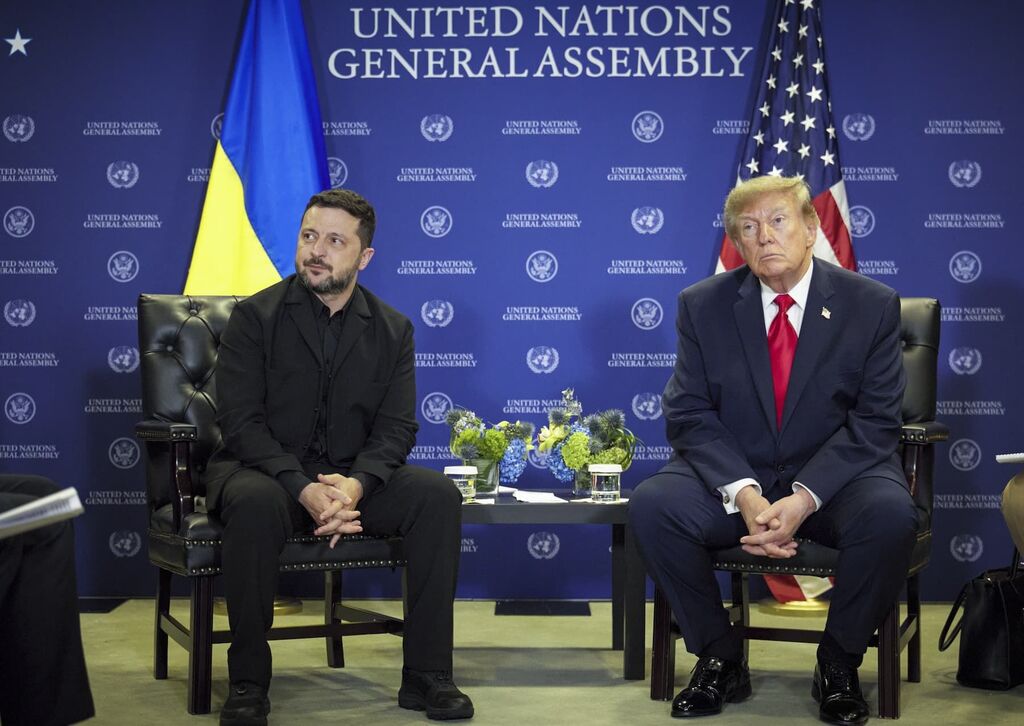

Trump’s diesel deal with Putin promises uncertain relief for American consumers while offering Moscow money and diplomatic legitimacy. For Ukraine, the main questions is: has its most powerful partner definitively taken the wrong side? Economist Oleksandra Moskalenko writes that Zelenskyy’s sense of betrayal reflects a strategic fear: that Washington is easing pressure on the Kremlin without securing protection for the people Russia continues to attack.
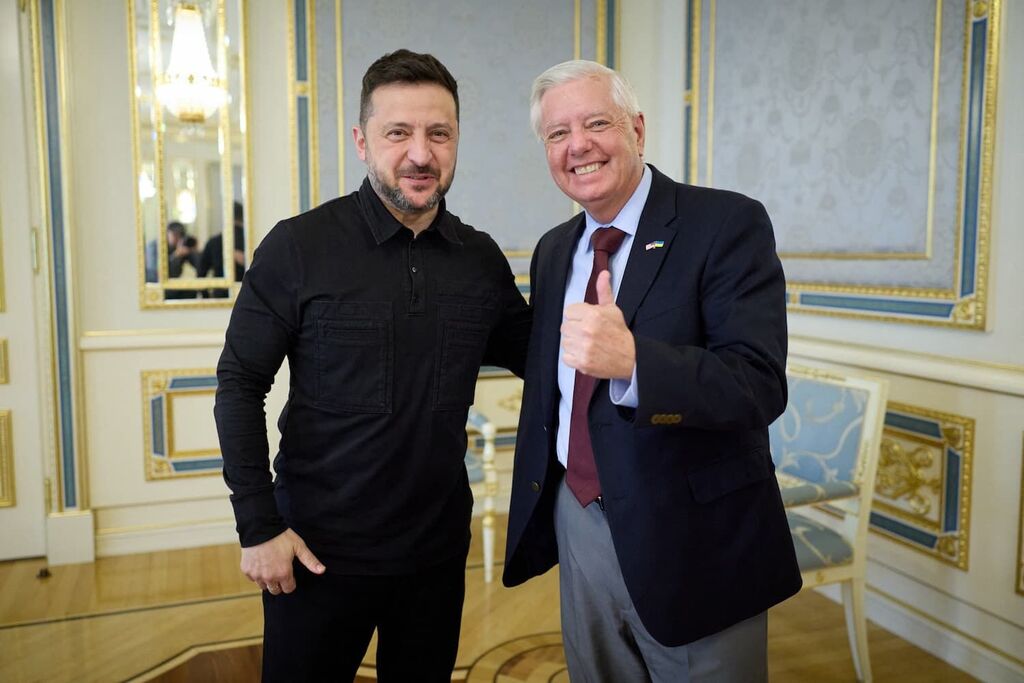 Volodymyr Zelensky with late US Senator Lindsey Graham, after whom the new sanctions law was named. Graham was Ukraine's closest ally within the Republican party. Photo: Ukrainian Presidential Press Service / ANP / AFP
On September 18, US president Donald Trump signed the Lindsey O. Graham sanctions law, colloquially referred to as the 'Sanctions from Hell' bill. It raised the question whether Washington would use its powers consistently enough to constrain Russia’s war against Ukraine. The recent diesel agreement between the United States and Russia indicates the opposite.
On October 9, Donald Trump announced an agreement with Vladimir Putin to release Russian diesel onto US and global markets. A week later, he waived central provisions of the sanctions law he had signed on September 18.
The Trump administration’s motive for the deal was cheaper fuel. American farmers, hauliers and households face real costs, but the question is whether this diesel deal will do anything to offset those. And does it justify weakening pressure on Russia while it is still attacking Ukraine every day?
Asked on October 14 whether he felt betrayed, Volodymyr Zelensky replied ‘Really, yes’. Two days later, he warned that diesel concessions could lead to further relief on Russian gas, banking and other sectors. Zelensky is concerned that the diesel deal will set a precedent: that Russia could regain commercial access without ending its aggression against Ukraine.

Thirteen hours of fuel
The initial commitment was more than 300,000 tonnes of Russian diesel for the US, followed by 500,000 tonnes in November and one million thereafter. A further three million tonnes were conditional on refinery capacity, bringing the announced total to 4.8 million tonnes.
Using the UN conversion factor of 7.23 barrels per tonne, the first 300,000 tonnes equal approximately 2.17 million barrels. The US Energy Information Administration puts American distillate demand (diesel and heating oil) at 3.974 million barrels per day over recent weeks.
That means that the first tranche of diesel equals 13.1 hours of US demand. The full conditional programme would equal approximately 8.7 days.
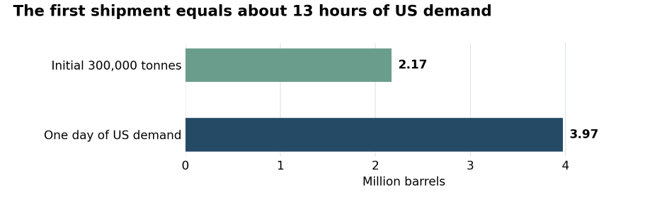 Initial promised volume compared with one day of US distillate demand, in million barrels. Author’s calculation using EIA and UN data.
Small increases in supply can still affect prices in a tight market. However, sustained relief clearly requires additional supply and reliable delivery over time. The current diesel deal is unlikely to have any significant impact on prices.
From a Ukrainian perspective, the diesel deal and deferred sanctions have a bigger meaning beyond fuel prices. Not only does the deal bring in new money for Moscow to use in its war against Ukraine, the White House is also signalling that it is willing to lift economic pressure on Russia, even while daily strikes on Ukrainian cities continue.
The larger shortage caused by Trump’s war against Iran
Blaming Ukraine’s strikes on Russian oil refineries for higher fuel prices also obscures the wider picture of disruption. The IEA’s August comparison shows Saudi and other Middle Eastern seaborne diesel exports falling by a combined 900,000 barrels per day year on year. The decline from Russia was 600,000. Increases elsewhere partly offset both losses.
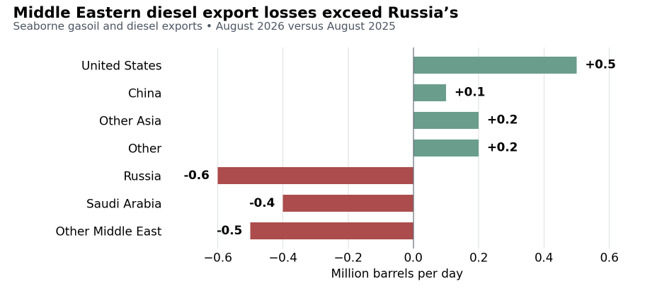 Changes in seaborne gasoil and diesel exports, August 2026 against August 2025, million barrels per day. Source: IEA, based on Kpler, CC BY 4.0.
While it is hard to make detailed claims about which events have had the biggest impact on fuel prices, the US–Iran war and disruptions around the Strait of Hormuz play a central role. Yes, Ukrainian attacks have constrained Russian refining, but that does not make Ukraine primarily responsible for the broader crisis.
A sweetener for the midterms
If the price impact will be minor at best, then why did Trump conclude this deal?
In an AP-NORC survey conducted on 8–12 October, 84 per cent of voters identified living costs as a leading electoral issue; 79 per cent disapproved of Trump’s handling of them. With midterm elections coming up in early November, there seems to be a clear political incentive for the US president to take (symbolic) action against high fuel prices.
Opposition to the diesel deal has been voiced across party lines. Republican and Democratic senators have challenged the imports.
Washington now seems to treat Putin as a supplier of solutions. This comes despite reports of Russian military and intelligence assistance to Iran, which sometimes directly threatens American forces. Trump himself disputes those claims, which came from his own intelligence services.
Washington now seems to treat Putin as a supplier of solutions, despite reports of Russian military and intelligence assistance to Iran, which sometimes directly threatens American forces
So far, the White House has not taken concrete steps to reestablish commercial relations with Russia beyond the diesel deal. For instance, Russian sovereign assets held at American banks remain frozen.
On October 16, Donald Trump issued an executive order waiving major sanctions and restrictions on Russia under the Lindsey O. Graham Sanctioning Russia and Iran Act until further notice, but the order does not abolish existing sanctions.
And a 2022 US law banning the import of Russian oil – which the diesel deal does or does not violate – remains in place. This Ending Importation of Russian Oil Act sets clear conditions for lifting the ban, including ‘an agreement to withdraw Russian forces and for the cessation of military hostilities that is accepted by the free and independent government of Ukraine’.
Ukraine is dangerously exposed
For Kyiv, the diesel agreement also coincided with uncertainty over American support for Ukraine’s defence. On October 18, Zelensky said that US intelligence sharing on Russian missile threats had resumed after an interruption; Trump denied that it had ever been interrupted.
According to Zelensky, a speed limit on Ukrainian Starshield use remains in place, hampering some Ukrainian interceptor drones and deliveries to frontline troops. Starshield is SpaceX’s military service. Reuters reported, citing officials, that the restriction originated inside the White House; Marco Rubio denied White House responsibility. In any case the situation reveals that Ukraine is dangerously exposed to the whims of a few people across the ocean, who essentially decide whether or not Ukraine can properly defend itself.
The numbers show how vulnerable the country is. UN monitors verified 328 civilians killed and 2,105 injured in September only and warned of renewed attacks on electricity and heating facilities. Children lose safe classrooms, older people face cold homes and interrupted care. Destroyed infrastructure drains Ukraine’s budget.
In its October 14 editorial, The Kyiv Independent argues that Trump is ‘now actively helping Russia win the war’.
10 jaar RAAM: wij hebben uw hulp nodig
In 2026 bestaat RAAM 10 jaar. Het is geen vanzelfsprekendheid dat we blijven voortbestaan. Daarvoor hebben we uw hulp nodig. Met uw giften kunnen wij auteurs een bescheiden honorarium betalen, onderzoek doen en Kennisplatform RAAM overeind houden. Wij zijn een ANBI: uw gift is aftrekbaar van de belasting.